Professional Water Filtration & Softeners service
Water Filtration in Florida: Fix the Water, and Half Your Plumbing Problems Retire
Drinking hard mineral water is a very bad practice for your health. If your filter is not working properly in Florida or nearby areas then you need to fix it because there is no compromise on your health. Meanwhile it can also damage your appliances as well. Just Fix now. What makes you feel that you need to repair water filtration in Florida?
White crust on the faucets. Spots on every glass. Skin that feels tight after a shower, and a water heater on its second early death. Am I right? “Yes” So, that’s not a cleaning problem or bad luck. That’s Florida water, and it’s fixable at the point it enters your house. Just need to call our professionals and they will fix it.
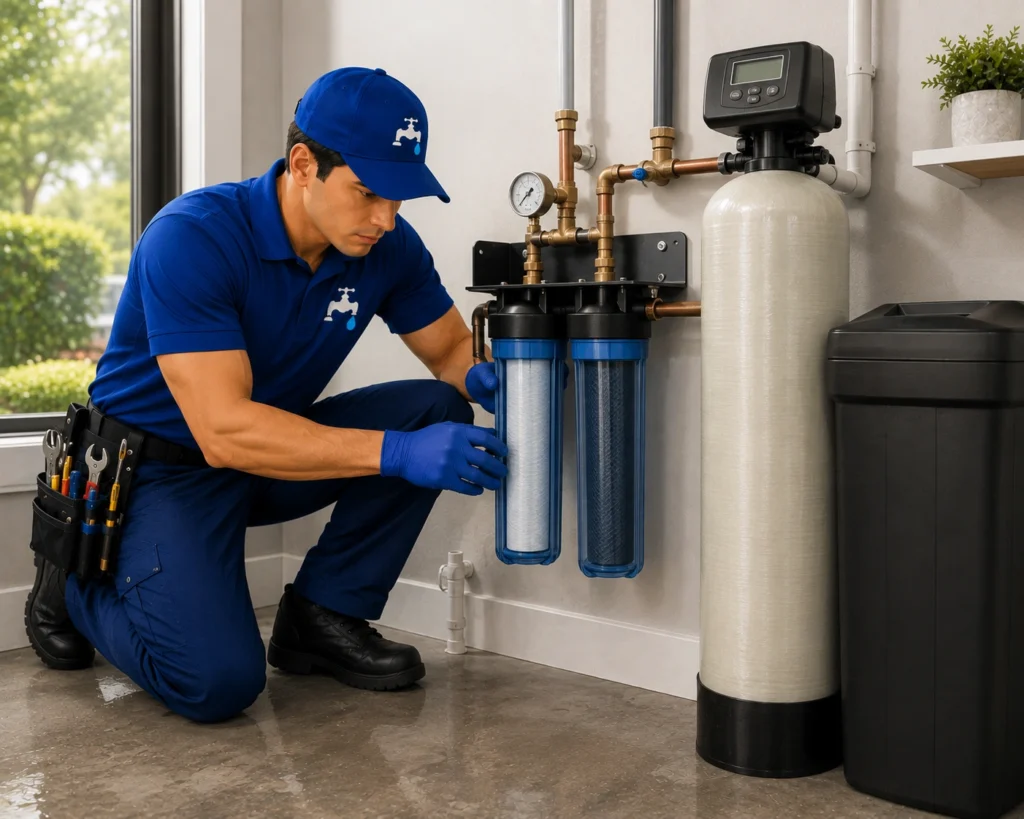
Most people fight their water without knowing it. They scrub the white crust off the shower head every month, buy the rinse aid, replace the coffee maker again, and assume that’s just what owning a home is. It isn’t. Those are all the same problems wearing different costumes.
Water filtration in Florida starts with a simple idea: treat the water once, where it enters the house, instead of fighting its side effects in every room forever. Florida’s water is safe to drink almost everywhere, but safe and easy to live with are different things. The minerals and treatment chemicals that come with it wear on your fixtures, your appliances, your skin, and your patience. The right system, matched to what’s actually in your water, ends that quietly.
What Florida Water Does Around Your House
White crust on faucets and shower heads. That’s mineral scale, the calling card of hard water, and Florida’s is some of the hardest going. The crust you can see on the fixtures is also forming where you can’t see it, inside pipes, valves, and appliances.
Spots on glasses and a dishwasher that never quite wins. Same minerals, drying on every surface the water touches. No detergent fixes water chemistry.
Dry skin and flat hair. Hard water doesn’t rinse soap fully, so a film stays behind on skin and hair. People often notice the difference within a week of a softener going in, usually in the shower before anywhere else.
A pool-water taste or smell from the tap. The chlorine that keeps city water safe on its way to you has done its job by the time it arrives. A whole-house carbon filter takes the taste and smell out at the door.
A rotten-egg smell, especially on well water. Common across Florida’s well-served areas, and it usually means sulfur in the water. It’s treatable, and it’s one of the most satisfying problems we fix, because the change is immediate and total.
Appliances that die young. Water heaters, dishwashers, washing machines, ice makers. Scale shortens all of their lives, and the water heater makes it worse. If yours is rumbling or on its second replacement, our water heater repair page explains what the sediment is doing in there.
Softener, Filter, or Drinking System: Which One Fixes Your Problem?
These get sold interchangeably, and they shouldn’t be. Plain answers:
A water softener removes minerals. It fixes the scale, the spots, the crust, the dry skin, and the appliance wear. If your complaints are about what water leaves behind, the softener is your machine.
A whole-house filter removes taste, smell, and sediment. Chlorine taste, odors, discoloration, and grit. If your complaints are about what the water is like coming out, filtration is the answer. Many Florida homes benefit from both, in one combined system.
A drinking water system polishes one tap. Installed under the kitchen sink, it gives you bottled-quality water for drinking and cooking without buying bottles. The rest of the house doesn’t need drinking-grade water, which is why this targets one tap instead of the whole home.
Well water gets its own conversation. Sulfur, iron staining, and sediment need treatment matched to a water test, not a boxed system off a shelf. This is where testing first matters most.
We Test Your Water Before We Quote Anything
Here’s the honest problem with this industry: systems get sold by the box, sized by the salesperson’s commission, and installed in homes whose water was never tested. Some homes genuinely don’t need a softener. Some need one urgently. The only way to know is to test what’s coming out of your tap, so that’s where we start, every time.
The test takes minutes, it tells us hardness, chlorine, and what else is riding along, and the quote that follows is matched to those numbers and your house, not to a package. If your water comes back fine, we’ll tell you that too, and you’ll have spent a few minutes learning your water is fine. That’s a good outcome, and we’re comfortable with it.
Water Filtration Cost in Florida
Water softeners installed typically run $[1,200 to $5,000] depending on capacity and your home’s plumbing layout. Whole-house filtration systems run in a similar range, and combined softener-plus-filtration setups cost less than buying both separately. Under-sink drinking water systems are the most affordable entry, typically $[400 to $700] installed. Well water treatment is quoted after testing, because the right system depends entirely on what’s in the water. Every quote is flat, written, and includes installation done right, not a box dropped in your garage.
Common Questions
Contact Us
Stop Scrubbing the Same Crust Off the Same Faucet
One test, an honest read on what your water actually needs, and a flat written price for the system that fixes it. Florida Plumbing Specialists, statewide.
Call Now, Answered 24/7