Professional Water Heater Repair & Installation service
Backflow Testing in Florida: Got the Letter From Your Utility? Here’s What It Means
Half the people on this page got a notice saying their backflow assembly is due for its annual test. The other half watched water come up a floor drain during the last storm. Both problems live on this page, both are fixable, and neither is as complicated as it sounds.
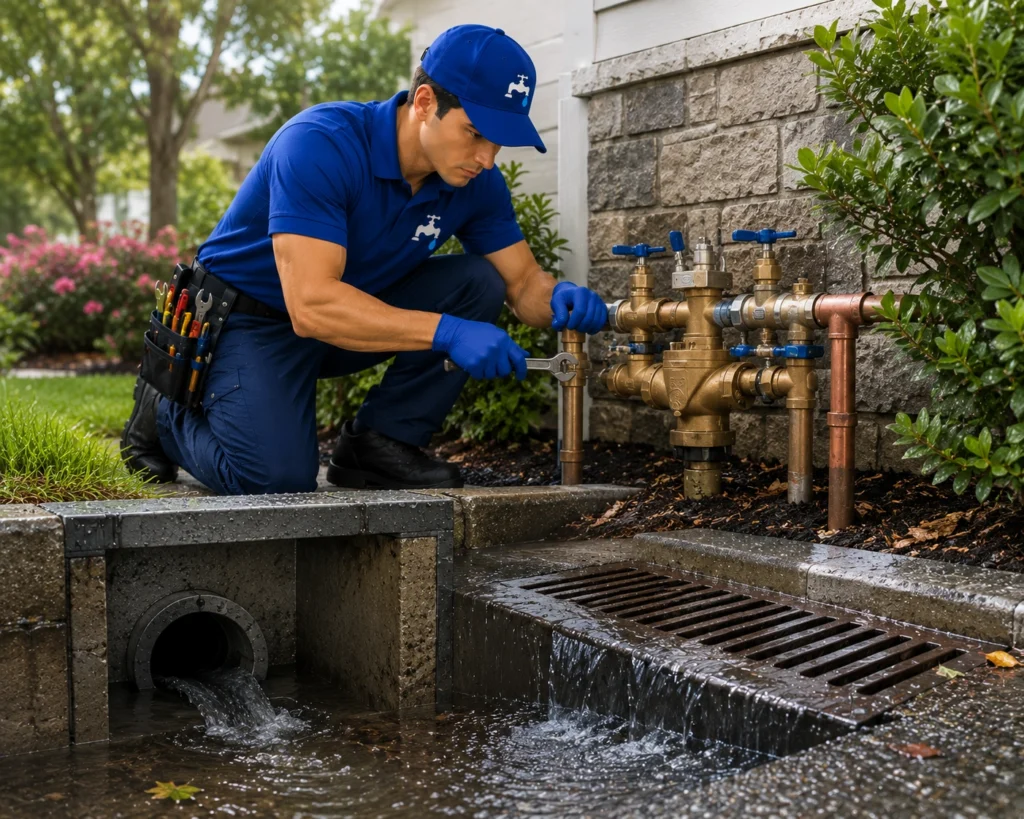
It usually starts with an official-looking letter: your backflow prevention assembly is due for testing, a certified tester is required, and there’s a deadline with consequences attached. If you’ve never thought about the small device near your meter or irrigation line before, this is the moment it introduces itself.
Backflow testing in Florida is a genuine requirement, not an upsell dressed as one. Many Florida utilities require an annual test of backflow preventers on irrigation systems and commercial properties, performed by a certified tester, with results filed back to the utility. Skip it long enough and utilities can, and do, shut off service. The good news: the test is quick, the price is small, and we handle the paperwork side so the letter stops arriving in its threatening form.
The Annual Test: What Happens and What You Get
The visit is short. A certified tester connects gauges to the assembly, verifies each internal check holds pressure the way it should, and confirms the device still does its one job. Most tests take under half an hour.
Pass: the paperwork is the product. The results get filed with your utility, you get a copy, and your compliance clock resets for the year. You don’t chase forms, and the next letter you get should be next year’s routine reminder.
Fail: repair on the spot, most of the time. The common failures, worn internal checks and seals, are repairable in the same visit with the right kit on the truck. Full replacement is reserved for assemblies that are genuinely done, usually after years of Florida sun and water have had their way, and you’ll get the flat price for either path before anything happens.
Miss the deadline and the stakes are real. Utilities enforce this one. Fines and service shutoffs happen, and reconnection after a compliance shutoff is more expensive and slower than the test ever was. If your deadline has already passed, call anyway. Getting compliant late beats staying noncompliant.
What Backflow Actually Is, in One Paragraph
Your water system is designed to flow one direction: from the utility, into your home. Backflow is that flow reversing, which can happen when pressure drops in the main, a big line breaks nearby, a hydrant opens for a fire, and anything sitting in your pipes or irrigation system gets pulled backward toward the clean supply. Fertilizer from a lawn system, standing water, whatever’s there. The backflow preventer is a one-way gate that makes that reversal physically impossible. It protects the neighborhood’s water more than your own, which is exactly why utilities require it and test it. Yearly testing exists because these devices sit outside, in Florida weather, full of Florida water, and their internal parts wear like anything else.
When the Storm Sends Water the Wrong Way
Backflow has a louder cousin that shows up during Florida’s storm season: sewage and storm water backing up into homes when heavy rain overwhelms municipal systems. If you’ve ever watched water rise in a floor drain, a shower, or the lowest toilet in the house during a downpour, you’ve met it.
The mechanics are simple and unfair. The public system fills beyond capacity, pressure builds in the mains, and the overflow looks for exits. The lowest drains in homes connected to that system are the exits. Your plumbing didn’t fail. It just happened to be the open door.
The fix is a backwater valve: a one-way gate installed on your sewer line that lets everything flow out and nothing flows back. For homes that have flooded this way once, it’s the difference between the next big storm being weather and being an insurance claim. If the backups are happening in dry weather too, that’s not the storm’s fault, and our [sewer line repair] page covers what a camera inspection finds in those cases.
Before and After the Storm: What We Check
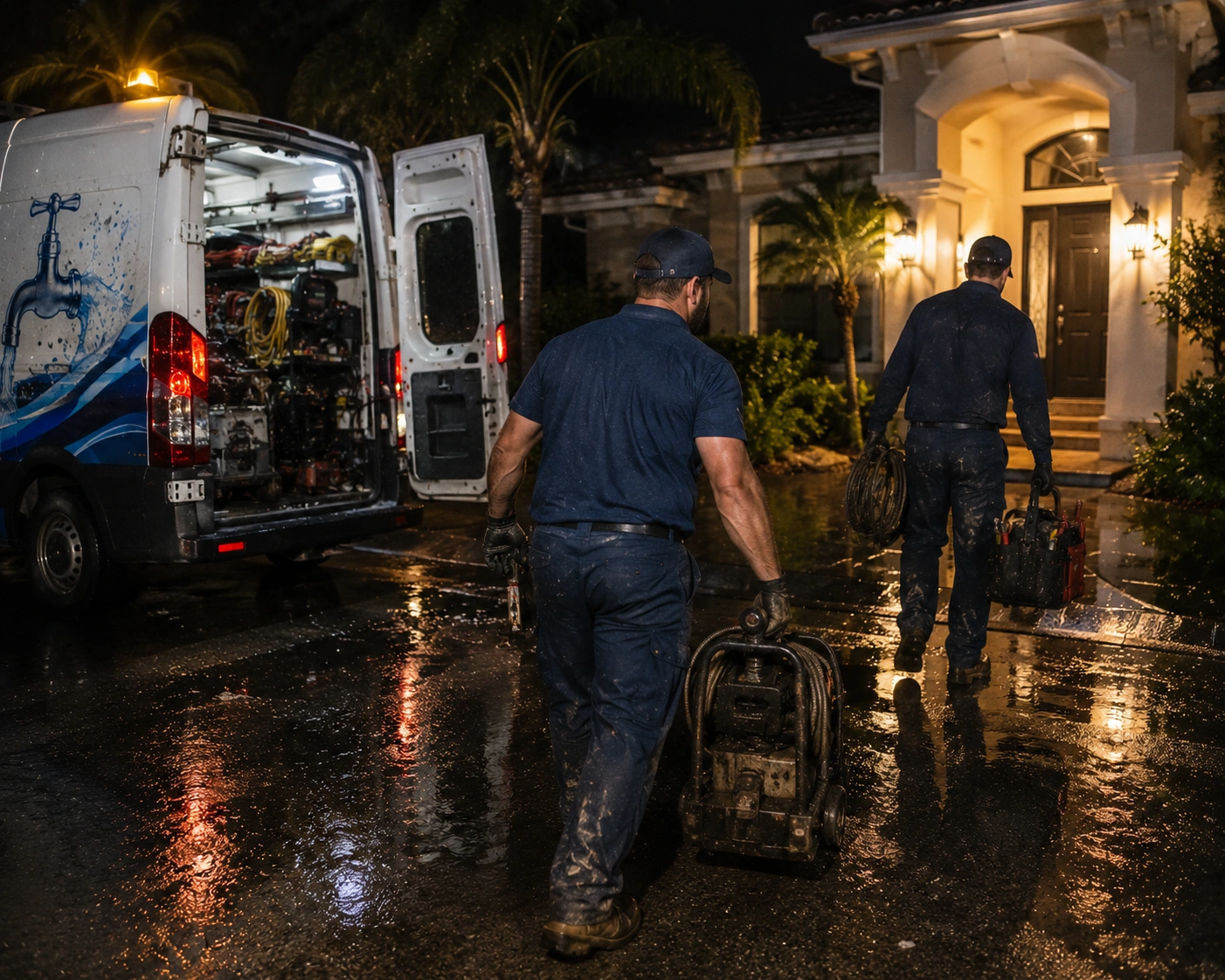
Before hurricane season: the backflow assembly tested and healthy, the backwater valve, if you have one, verified working, outdoor drains and cleanouts clear of the debris that turns heavy rain into standing water, and sump or lift equipment, where present, actually running rather than assumed running.
After a storm: any backup that happened documented and cleared, valves checked for debris jammed in them by the surge, and an honest read on whether what happened was a one-off or a sign your home needs the protection it currently doesn’t have.
None of this takes long, and the before-season visit in particular is the cheapest item on this entire page relative to what it prevents.
Backflow Testing Cost in Florida
An annual certified backflow test typically runs $[50to $175] flat, filing included. Repairs to a failed assembly commonly run $[250to $300] depending on the parts, quoted before work starts. Backwater valve installation depends on your sewer line’s layout and access, typically $[300 to $1200], and it’s quoted after we’ve actually looked, not guessed from the phone. Commercial properties with multiple assemblies get per-property pricing and a single renewal schedule so compliance stops being twelve separate reminders.
Common Questions
Contact Us
The Letter Handled. The Storm Door Closed.
Certified testing with the paperwork filed, honest repairs when the device fails, and a one-way gate against the next storm. Florida Plumbing Specialists, statewide.
Call Now, Answered 24/7