Professional Leak Detection service
Leak Detection Florida: Find the Water Before It Finds Your Floor
Due to the heavy storm, most homes have leak detection in Florida. Most people are finding licensed plumbers near Florida. No problem, we can fix this issue for you. What issue are you facing right now?
The water bill jumped for no reason? A warm spot on the floor, or a stain that keeps coming back? A hidden leak is the most common explanation, and the sooner it’s found, the smaller the repair. Same-day diagnosis, statewide.
Do you know? Most water damage in Florida homes doesn’t start with a dramatic burst. It starts small: a water bill that’s fifty or a hundred dollars higher than usual, a patch of floor that feels warm underfoot, a stain on the ceiling that dries up and comes back a few weeks later. None of it looks urgent. All of it usually means the same thing, water is escaping somewhere you can’t see, and it’s been going on longer than you think.
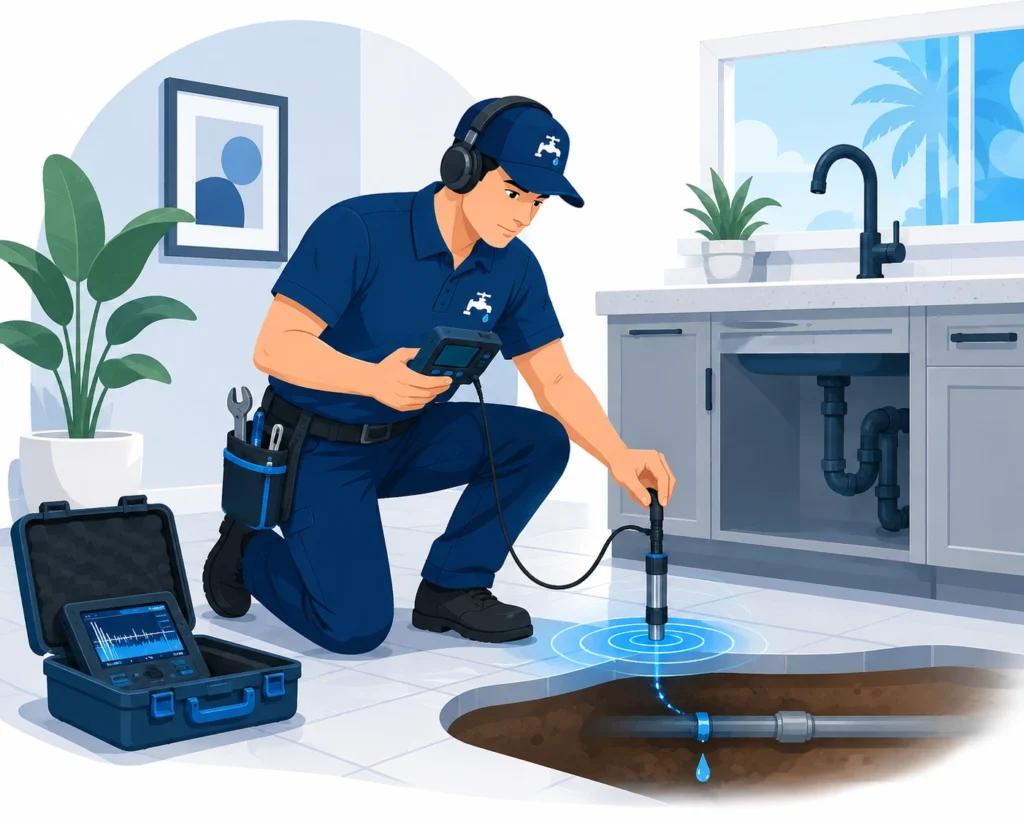
Leak detection in Florida exists because guessing is expensive. Tearing into a wall or slab on a hunch can cost more than the leak itself. Electronic detection equipment finds the actual source first, so the repair that follows is small, targeted, and priced honestly.
Signs You Might Have a Hidden Leak
Your water bill jumped and nothing changed. No new appliance, no extra houseguests, just a bill that’s noticeably higher than the last few months. This is often the first and only sign of a slab leak running quietly under the foundation.
A warm spot on the floor, especially over a hot water line. If you can feel heat through the flooring in a spot that has no reason to be warm, that’s usually water from a hot line escaping under the slab and warming the concrete above it.
A stain that dries up and comes back. A ceiling or wall stain that fades after a few dry days and reappears after use of a nearby fixture points to a slow, ongoing leak rather than a one-time spill.
The sound of running water when everything is off. Turn off every fixture in the house and listen near the water meter. If it’s still spinning, water is going somewhere.
Mold smell or visible mold with no obvious water source. Musty odor in a room with no recent flooding is a strong sign of moisture trapped somewhere out of sight.
Low water pressure showed up gradually. A leak upstream of a fixture can rob it of pressure long before the leak itself becomes visible.
One or two of these on their own aren’t a certainty. Several together, or any of them lasting more than a couple of weeks, is worth a proper look.
Why Hidden Leaks Are So Common in Florida?
Florida gives water more ways to hide than most states. Homes here are built slab on grade, without a basement, because of the state’s high water table, so supply lines commonly run under the concrete slab itself. When one of those lines fails, the leak is invisible by design. It shows up as a warm spot or a water bill long before it shows up as a puddle.
Copper pipes add a second path. Florida’s chloraminated water, acidic soil, and constant humidity accelerate a specific kind of corrosion that eats tiny pinholes through copper from the inside. A pinhole leak can mist into a wall cavity for weeks, doing real damage while the wall itself looks completely normal.
And homes built between roughly 1978 and 1995 often still carry polybutylene supply lines, a plastic pipe that degrades from chlorine exposure and can develop leaks or fail outright with no warning at all.
Different causes, same result: water moving where you can’t see it. That’s why finding the leak is its own specialized step, not something to skip on the way to a repair.
How Leak Detection Actually Works?
1. You describe what you’re seeing. The water bill spike, the warm spot, the stain, whatever prompted the call. That detail narrows down where to start looking.
2. Non-invasive detection first. Acoustic listening equipment picks up the sound of water escaping under pressure, even through concrete and drywall. Thermal imaging can spot temperature differences that reveal a hot water leak under a slab. None of this requires opening a wall before the source is confirmed.
3. The leak gets pinpointed, not just located to a general area. The difference between “somewhere in this wall” and “eighteen inches from that outlet” is the difference between a small repair and a demolition project.
4. You get a flat written price for the fix. Once the source is confirmed, the repair, whether that’s a targeted slab access point, a section of repiped copper, or a polybutylene section swapped to PEX, is quoted before any work starts.
Leak Detection Cost in Florida
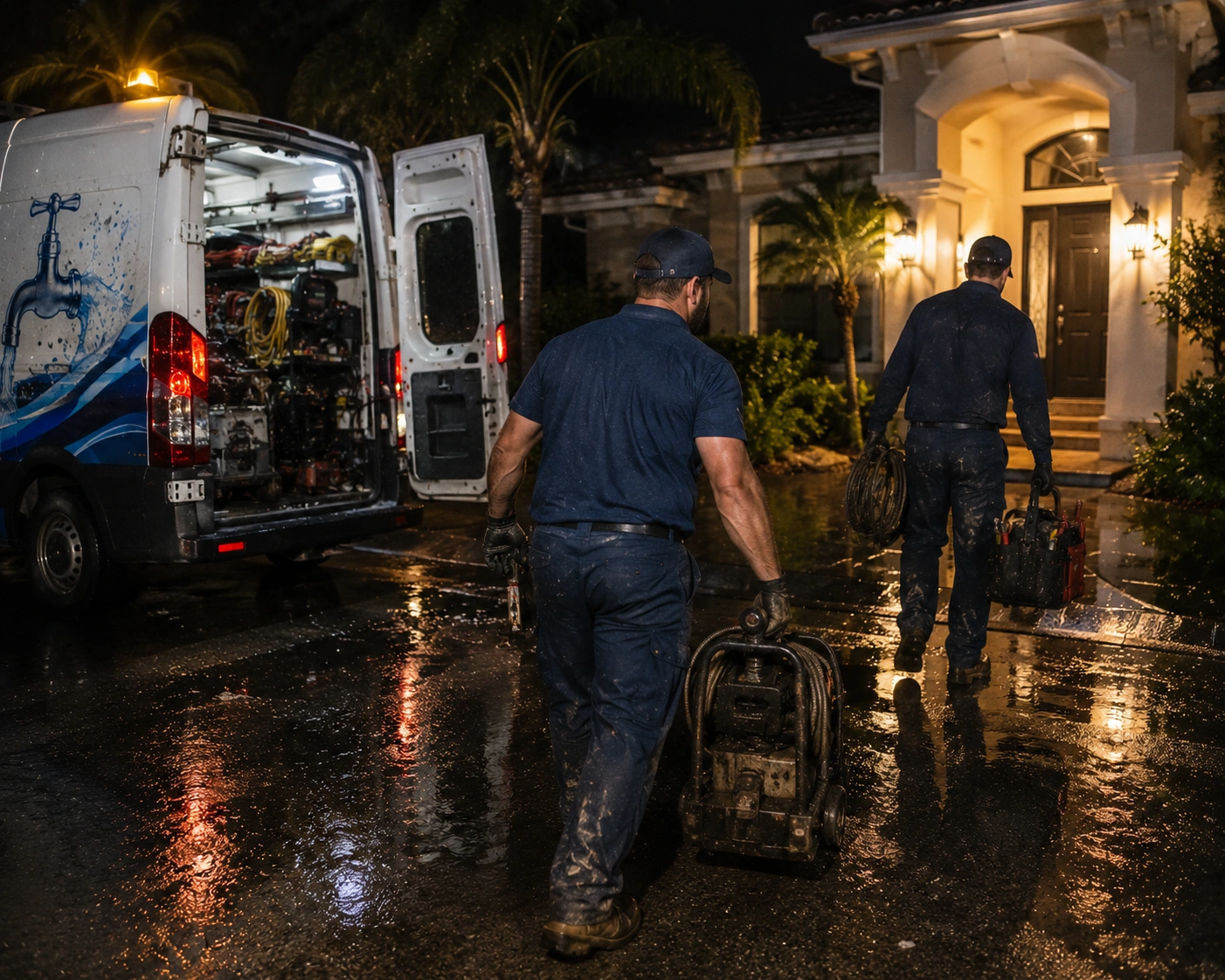
A standalone leak detection visit typically runs $150 to $400, depending on how large the search area is and what equipment the job calls for. Many companies, including ours, credit that fee toward the repair if you move forward with the fix. Finding a small leak early, in the $150 to $400 range, is consistently cheaper than the alternative: months of undetected water damage that turns into a multi-thousand-dollar repair once walls, flooring, or the slab foundation itself are compromised.
Common Questions
Contact Us
Find It Before It Finds Your Flooring
Water bill spike, warm spot, stain that won’t quit. Same-day leak detection, statewide, with a flat price for whatever comes next.
Call Now, Answered 24/7