Professional Repiping & Polybutylene Replacement service
Repiping in Florida: When the Pipes Themselves Are the Problem
Water is still leaking from your homes then the problem is your pipes. You need Repipping in Florida to prevent water damage in your house . People do not take it seriously but it can affect your whole house. What should you do now? Call us now to fix the whole pipe system.
Florida Minerals Rich water creates heavy scale buildup inside pipes and it closes the way of water through passes so you need to fix the whole pipe. We know it seems costly but we’ll inspect before changing the whole pipe in Florida.
If your home keeps springing leaks in different places, or an inspector just told you the pipes need to go, this is the page for that conversation. What repiping actually involves, how long it takes, and what your walls will look like after. Spoiler: better than you’re imagining.
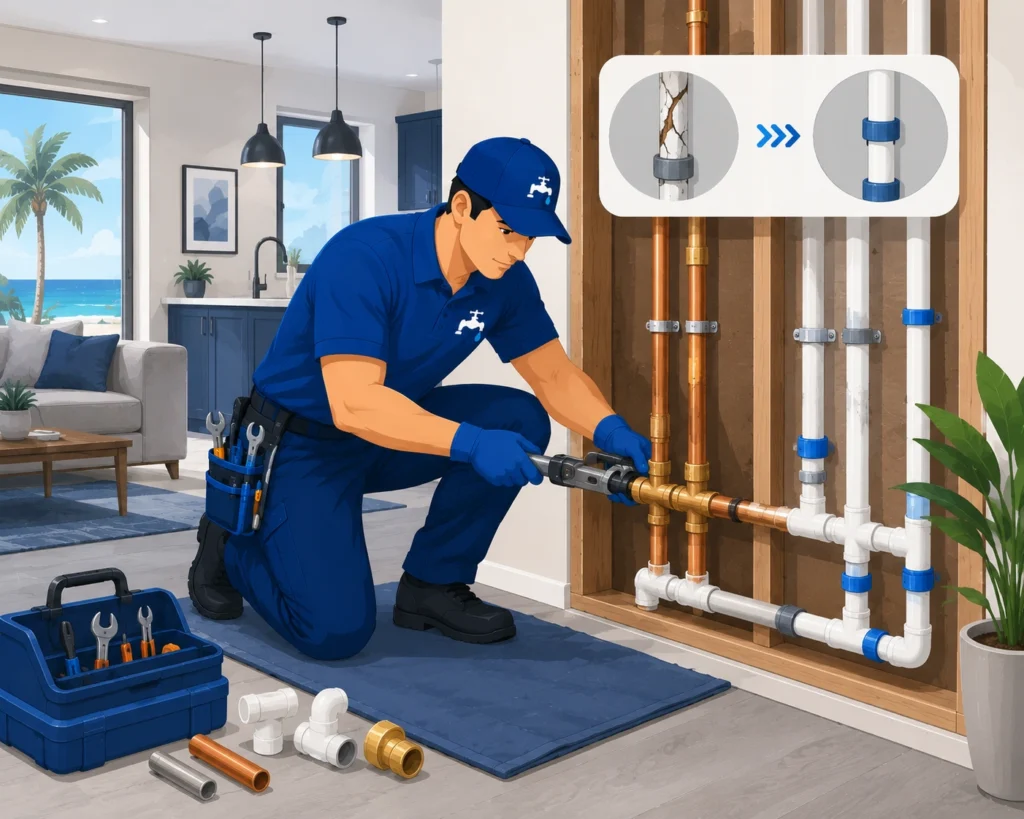
Nobody wakes up wanting new pipes. People end up on this page for one of a few reasons: the house keeps leaking in a new spot every few months, a home inspector flagged the pipes during a sale, an insurance company sent a letter about the plumbing, or a plumber just said the words “you should really think about repiping” and now you’re wondering if that’s true or a sales pitch.
Here’s the honest version. Repiping in Florida means replacing the water pipes running through your home with new ones, because the old ones have reached the point where patching them one leak at a time costs more than replacing them once. Sometimes that’s the whole house. Sometimes it’s just the bad section. This page walks through how to tell which one you need.
Signs Your Home Might Need Repiping
Leaks keep happening in different places. One leak is a repair. A second leak in a different spot within a year or two is a pattern, and the pattern is the pipes aging out everywhere at once, not bad luck striking twice.
The water pressure has slowly gotten worse for years. Old metal pipes corrode from the inside, narrowing a little every year, like a clogged artery. If your shower has been getting weaker since you moved in, the pipes are likely closing up.
The water comes out rusty or discolored, especially first thing in the morning or when you’ve been away. That color is the inside of your pipes, flaking off into your water.
Your home was built between 1978 and 1995. A huge number of Florida homes from those years were built with a gray or blue plastic pipe called polybutylene. It seemed fine at the time. It wasn’t. The chlorine in normal city water slowly weakens it from the inside, and it can look perfect right up until the day it splits. There’s more on this below, because it’s the number one reason Florida homes get repiped.
Your insurance company is asking questions about your plumbing. Insurers know which pipes fail. If yours has asked what your pipes are made of, raised your rate, or declined to renew over plumbing, that letter is telling you what an inspection would be.
You’re buying or selling, and the inspection flagged the pipes. Deals genuinely fall apart over this. A repipe with paperwork often costs less than what the buyer will ask off the price, and it removes the problem instead of negotiating around it.
Do You Still Have Polybutylene Pipes?
If your home has gray or blue flexible pipes, usually visible near the water heater, under sinks, or in the garage, here’s what you’re dealing with, minus the chemistry lecture.
Polybutylene was the budget-friendly piping of choice across Florida for almost twenty years. Millions of homes got it. Then it started failing, not from bad installation, but because ordinary treated tap water breaks the material down from the inside over time. The damage is invisible. The pipe looks fine on the outside while it grows brittle on the inside, and the failure, when it comes, is usually sudden: a split line and water pouring into a wall, a ceiling, or across a floor.
Three practical things follow from that. Home inspectors flag it on sight, which complicates any sale. Many insurance companies charge more, or won’t cover homes that still have it. And there is no repair for it, because the problem isn’t one bad spot, it’s the material itself. The fix is replacement, and the good news is that replacing it is a well-worn, predictable job at this point. We’ve done it many times, and it’s less disruptive than most homeowners fear.
Not sure what you have? Look at an exposed pipe near your water heater or under a sink. Gray or blue plastic with metal bands at the connections is the sign. Or send us a photo and we’ll tell you in a minute flat.
What a Repipe Actually Looks Like, Day by Day
The fear behind every repiping call is the same: are you going to destroy my house? Here’s the honest picture.
Day one: the new pipes go in. New lines, usually a flexible modern piping that snakes through walls and attics with far fewer openings than the rigid old pipes needed, get run alongside your existing system. Your water stays on for most of this. In Florida homes, the new lines typically route through the attic rather than under the concrete slab, which means no jackhammering your floors.
The switchover: a few hours without water. Once the new system is in place, we connect it and disconnect the old one. This is the only real interruption, usually a single afternoon.
The openings: small, planned, and patched. A repipe does require some openings in drywall, mostly small rectangles behind fixtures, and we tell you exactly where before we start. Every opening gets patched. The old pipes stay in the walls, drained and dead, which is normal practice and nothing to worry about.
The whole job: typically two to four days for an average home. You live in the house the entire time. Larger homes and complicated layouts run longer, and you’ll know the schedule before anything starts.
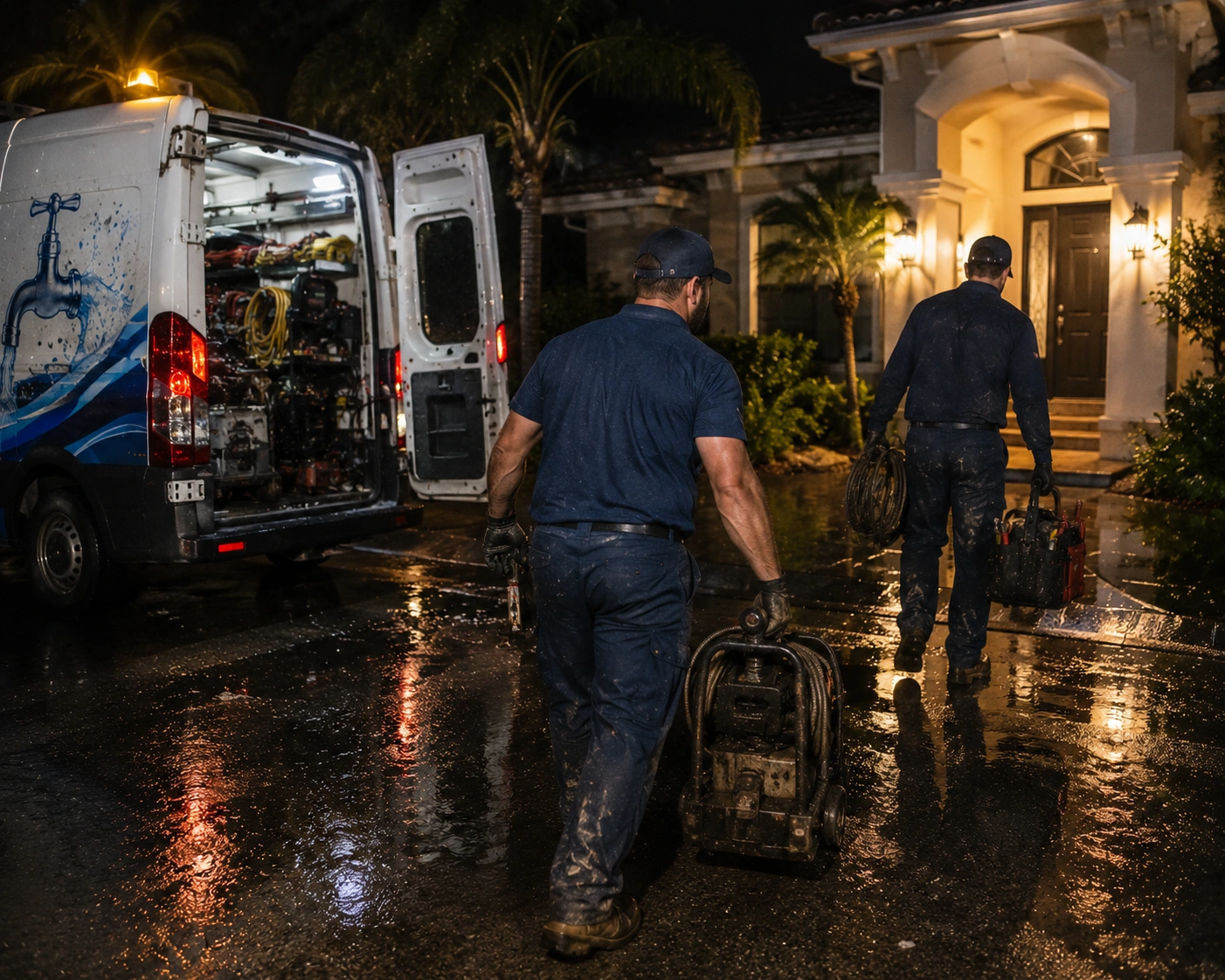
What Are Polybutylene Pipes? Should You Replace Them?
Polybutylene is a gray or blue plastic water pipe commonly installed in Florida homes built between 1978 and 1995. It was widely used because it was affordable and easy to install, but many of these pipes have since proven to fail as they age, often without obvious warning signs.
The biggest issue is that the entire plumbing system may be made from the same material. Repairing one leaking pipe doesn’t stop another section from failing later, which is why homeowners with polybutylene plumbing often deal with recurring leaks, insurance concerns, and problems during home inspections.
If your home still has polybutylene pipes, replacing the system is often the most reliable long-term solution. Not sure what type of piping you have? We can identify it during an inspection and honestly recommend whether a repair, partial repipe, or full repipe is the right choice.
Repiping Cost in Florida
A whole-home repipe for a typical Florida house generally runs from around $[4,000 to $10,000+], depending on the home’s size, how many bathrooms it has, and how accessible the pipe runs are. Partial repipes, replacing just a failed section or one problem line, cost much less and are the right answer more often than repiping companies like to admit. You get a flat written price after we’ve seen the house, and if a partial fix genuinely solves your problem, that’s the option you’ll be quoted first.
Worth weighing against that number: what the leaks are already costing you. Repeated repair bills, rising insurance premiums, water damage repairs, and for polybutylene homes, the ticking-clock risk of the big failure. A repipe is a large expense that ends a series of larger ones.
Common Questions
Contact Us
Stop Fixing the Pipes One Leak at a Time
An honest read on whether you need a full repipe, a partial one, or just a repair. A flat written price either way. Florida Plumbing Specialists, statewide.
Call Now, Answered 24/7