Professional Garbage Disposal Repair Service
Garbage Disposal Repair in Florida: Humming, Jammed, Leaking, or Just Dead
Severe clogs from fibrous local foods, unit jams, and water leaks can damage your garbage disposal in Florida kitchen Sink. It feels frustrating but you need to fix it instantly otherwise it may damage your motor. Our professional teams will fix it when you call them.
Every disposal fails one of four ways, and every one of them is fixable or replaceable in a single visit. Tell us which sound yours is making, or not making, and we’ll usually know the fix before the truck leaves.
Is it Emergency? Call us Now
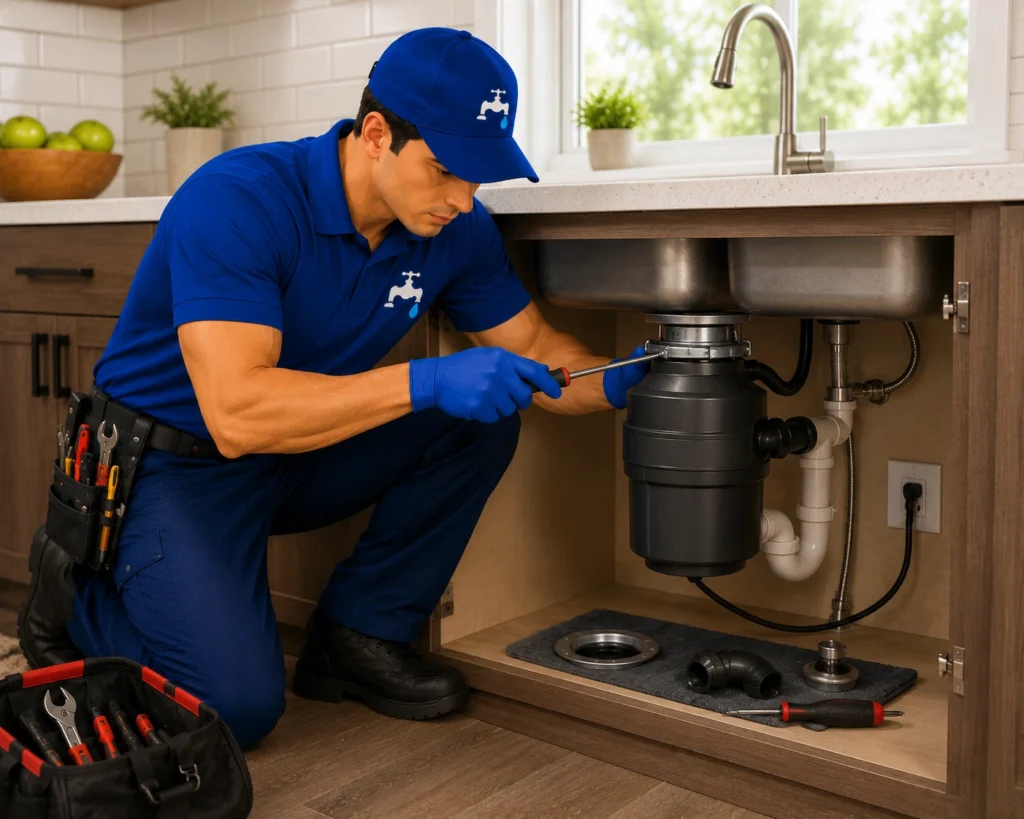
It always announces itself the same way. You flip the switch and get a hum instead of a grind, or a grind that sounds like gravel in a blender, or nothing at all. Then comes the fork every homeowner stands at: poke around under the sink, or call someone.
Here’s what makes garbage disposal repair in Florida one of the most straightforward calls we run: disposals fail in predictable ways, the fixes are known, and the whole visit, including a full replacement if the unit is done, fits in about an hour. This page tells you what each symptom means, what’s safe to try yourself, and when the honest answer is a new unit instead of a repair bill on an old one.
What Your Disposal Is Telling You?
It hums but doesn’t spin. The motor is alive and something is jamming the plates. This is the most common failure and the most fixable. It’s also where people get hurt, so the rule is absolute: never put your hand in the chamber. Ever.
It does nothing at all. Often it’s the built-in safety breaker that tripped. There’s a small reset button on the bottom of the unit, and pressing it, with the switch off, is the one genuinely safe DIY move worth trying before calling. If it trips again right away, the motor is telling you something bigger.
It runs but drains slowly, or backs up into the other sink. The disposal is usually innocent here. The clog sits in the drain line past it, and this is really a [drain cleaning] problem wearing a disposal costume.
It leaks underneath. Where it leaks from decides everything. A loose connection at the top or side is a repair. Water seeping from the bottom of the body means the internal seals are gone, and that unit is finished. No repair brings back a bottom-leaking disposal, and anyone who sells you one is selling you a return visit.
It grinds like rocks or rattles. Sometimes it’s a spoon or a bottle cap doing laps, which is retrieval, not repair. Constant metallic grinding with nothing inside means worn components, and on an older unit that’s usually the beginning of the end.
Repair or Replace: The One-Question Answer
Age settles most disposal decisions. These units live about 8 to 12 years, and the math is unusually simple because new ones aren’t expensive.
A young disposal with a jam, a tripped reset, or a loose fitting gets repaired, because the fix is small and the unit has years left. An old unit with a dead motor or a bottom leak gets replaced, because a repair would cost a meaningful fraction of a new disposal that comes with a warranty and better sound insulation than whatever was installed a decade ago. We carry replacement units on the truck, which is why “repair or replace” almost never means a second visit either way.
If you’re replacing anyway, it’s also the moment to pick the right unit instead of the cheapest: a half horsepower unit suits light kitchen use, while bigger households and heavy cooks are happier with three quarters or more, and the difference in daily use is real.
What Should Never Go Down a Disposal, Honestly
Every plumber has this list and every homeowner has broken it, so here it is without the lecture. Grease is the big one, because it hardens in the drain line past the disposal and builds the clog somewhere the disposal can’t be blamed for. Fibrous things like celery and corn husks wrap around the plates. Coffee grounds and eggshells make a sludge that settles in the trap. Pasta and rice swell after they’re down. Bones and fruit pits are a coin flip the plates eventually lose.
The disposal usually survives these. The drain line behind it is what pays, which is why so many “disposal problems” end up being drain problems a foot downstream.
Garbage Disposal Repair Cost in Florida
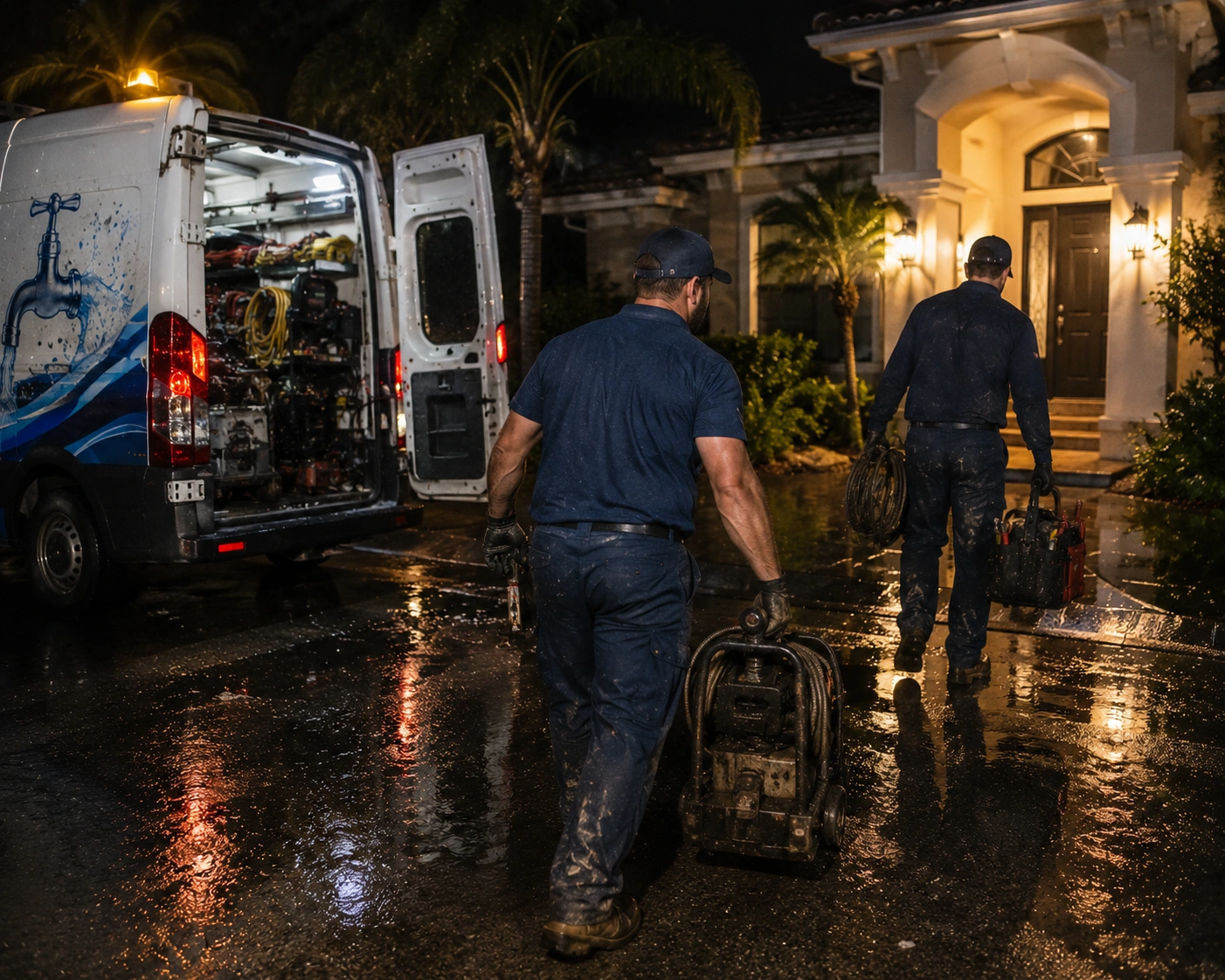
Repairs, clearing jams, replacing fittings, fixing top-side leaks, typically run $[200to $600] flat. A full replacement, unit and installation included, typically runs $[200to $600] depending on the horsepower and model you choose. Both numbers come as a flat written price before any work starts, and if your unit is the bottom-leak case where replacement is the only honest option, we say that on the phone, not after a service fee.
Common Questions
Contact Us
One Visit. Grinding Again, or Replaced and Better.
Tell us the symptom, get the honest verdict on the phone, and a flat written price before anything starts. Florida Plumbing Specialists, statewide.
Call Now, Answered 24/7